Health & Safety Policy — Garden Clearance Canary Wharf
 Garden Clearance Canary Wharf operates with a clear commitment to the health and safety of staff, clients and the general public. This policy sets out the principles and controls that apply to all garden clearance and rubbish removal activities undertaken by the company. It is designed to ensure that garden waste removal, landscaping debris handling and on-site rubbish collection are carried out in a safe, legal and environmentally responsible manner. All employees and contractors must familiarise themselves with the content of this policy and apply it in their daily work.
The objectives are to prevent injury and ill health, to minimise risk to the public and property, and to comply with statutory obligations where applicable. Responsibilities are allocated to ensure clear lines of accountability: management provide leadership and resources; supervisors enforce compliance; and operatives follow safe systems of work. The document emphasises risk assessment, incident reporting, training and continual improvement.
 Scope: This policy covers all garden clearance services provided including garden waste clearance Canary Wharf jobs, compost and green waste handling, removal of bulky garden items, and associated rubbish company service area tasks. It applies to temporary and permanent staff, subcontractors and visitors while on site, and during the transit of waste materials to designated disposal or recycling facilities.
Risk Assessment and Safe Systems
Before any clearance begins a documented risk assessment shall be completed by a competent person. This should identify hazards such as sharp objects, unstable structures, hazardous substances, manual handling risks and vehicle movements. Controls will be proportionate and may include exclusion zones, mechanical aids, signage, and personal protective equipment (PPE).Control Measures include, but are not limited to:
- pre-task briefings and documented method statements;
- use of gloves, eye protection, hi-vis clothing and suitable footwear;
- mechanical lifting aids for heavy or awkward items;
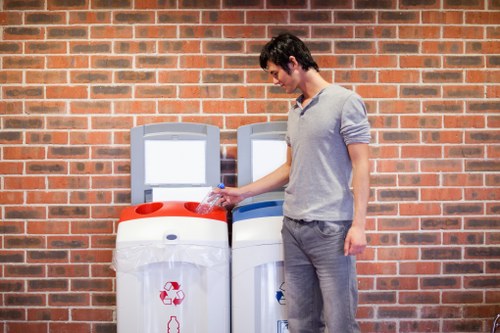
- segregation of recyclable material from general waste;
- regular inspection of tools, vehicles and containment systems.
Operational Guidance
Operatives must not undertake tasks beyond their training and competence. When dealing with garden rubbish removal or garden waste disposal, staff should follow the hierarchy of controls: eliminate hazards where possible, substitute risky activities, apply engineering controls and finally use PPE as a last line of defence. Supervisors must ensure that job allocation matches skills and that refresher training is scheduled for higher risk operations.Training and Competence: The company will maintain training records and ensure that employees receive appropriate instruction in manual handling, safe tool use, vehicle safety, hazardous materials awareness and first aid. Training will be refreshed periodically and when new equipment or processes are introduced. Competence assessment may include observed practical performance and written acknowledgement of procedures.
Incident Reporting and Investigation: All accidents, near misses or dangerous occurrences must be reported immediately and recorded. An investigation will determine root causes and corrective actions, with outcomes communicated to the workforce to prevent recurrence. Documentation will be retained to support continuous improvement of the garden clearance company safety management system.
 Sustainability and Waste Management: The company endorses best practice in waste handling by separating green waste, wood, metal and inert materials where feasible. This reduces landfill use and supports recycling. External disposal and tipping are arranged with authorised facilities and the company will maintain records of waste transfer and lawful disposal where relevant to the rubbish removal operations.
Vehicle and Traffic Management: Vehicles used for garden clearance must be maintained in a roadworthy condition. Drivers shall be licensed appropriately and adhere to load securing rules. On-site traffic plans will be implemented to protect workers and pedestrians; these may include banksmen, designated loading zones and speed control measures. Loading and unloading procedures must be supervised to prevent spillages and material drop.
 Emergency Preparedness: Emergency procedures, including first aid provision and fire response, will be established and displayed where practicable. Operatives will be trained to respond calmly and to prioritise human safety above property. Emergency contact arrangements are maintained internally, and all staff will be aware of local emergency services procedures.
Monitoring and Review: Management will review this policy at least annually or following any significant change in operations, legislation or after a serious incident. Performance will be monitored through inspections, audits and by reviewing incident reports. Continuous improvement is encouraged and staff suggestions for safer or more efficient ways of working are welcomed and considered.
Legal and Compliance: While this policy avoids specific legal statements, the company recognises its duty to operate responsibly within applicable health and safety frameworks. It is the responsibility of management to stay informed of relevant regulatory changes affecting garden clearance and rubbish removal activities, and to implement necessary changes.
Responsibilities summary:
- Management — leadership, resources and policy maintenance;
- Supervisors — implementation, monitoring and reporting;
- Employees — safe working, use of PPE and reporting hazards;
- Contractors — compliance with company safety standards when on site.
By following the measures described, the company aims to deliver garden clearance services and rubbish removal operations safely and sustainably, protecting people, property and the environment while maintaining high standards of professional conduct.